

Quick answer: The three main types of resumes are chronological (work history first, most recent job at the top), functional (skills first, with little focus on job history), and combination or hybrid (a skills section followed by work history). Chronological is the best choice for most people and the one recruiters and applicant tracking systems prefer. Combination works well for career changers and people with varied experience. Functional is rarely recommended. Specialized types include targeted, infographic, mini, video, federal, and academic CV formats.
Choosing a resume type is a bit like choosing an outfit for an interview: the content matters most, but the wrong format can still make a bad first impression. The good news is that for most people, the choice is simple.
This guide explains each type of resume, the pros and cons, who it's best for, and how to choose.
The 3 Main Types of Resumes
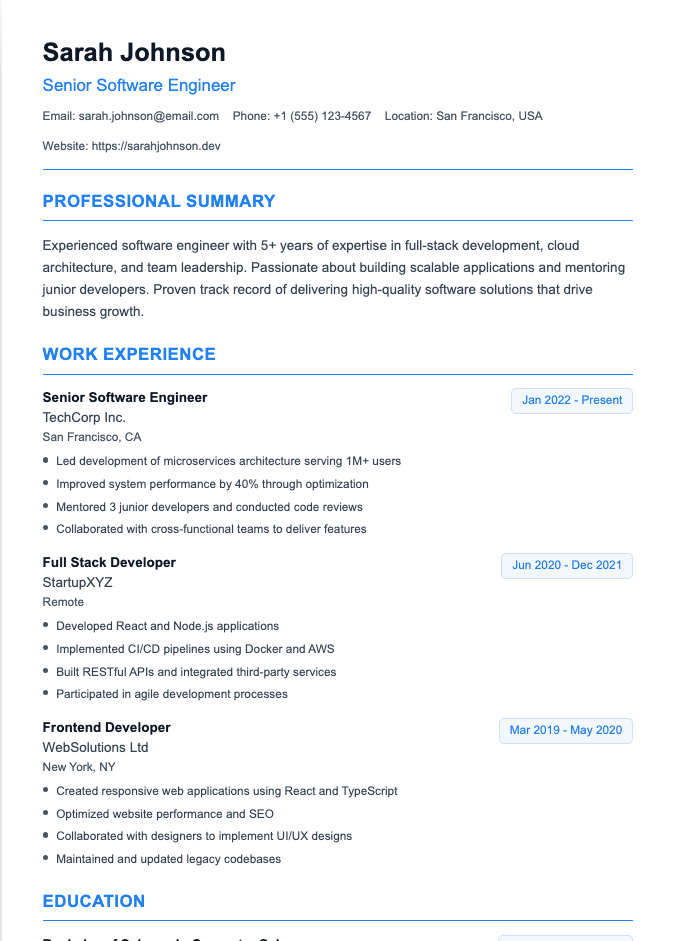
1. Chronological resume (reverse-chronological)
Lists your work experience starting with your most recent job and working backward.
Structure: contact information → summary → work experience → education → skills
Pros
- The format recruiters expect and read fastest
- Shows career progression clearly
- Works best with applicant tracking systems (ATS)
Cons
- Makes employment gaps and job-hopping more visible
- Less effective if your recent jobs are unrelated to the role you want
Best for: most job seekers with a steady work history in the same or a related field.
See our full guide to reverse chronological resumes.
2. Functional resume (skills-based)
Groups your experience by skill area (e.g., "Project Management," "Customer Service") and minimizes or removes job titles and dates.
Structure: contact information → summary → skill sections with examples → brief work history → education
Pros
- Puts transferable skills front and center
- Downplays gaps or unrelated jobs
Cons
- Many recruiters distrust it because it can look like you're hiding something
- Often confuses ATS, which expects job titles and dates
- Harder to see what you did where
Best for: rare cases, such as long career gaps or very unconventional backgrounds, and even then, a combination resume is usually better.
3. Combination resume (hybrid)
Starts with a skills summary, followed by a full reverse-chronological work history.
Structure: contact information → summary → skills summary → work experience → education
Pros
- Highlights relevant skills and still shows a clear timeline
- More trusted than a functional resume
- Flexible to tailor for each job
Cons
- Can get long or repetitive
- Takes more effort to write well
Best for: career changers, people returning from a career break, recent graduates, and candidates with diverse skills.
See our full guide to combination resumes.
Specialized Types of Resumes
Targeted resume
Any resume tailored to one specific job, using the posting's keywords and priorities. It's less a separate format and more a best practice: every resume you send should be targeted. See resume keywords optimization.
Infographic or creative resume
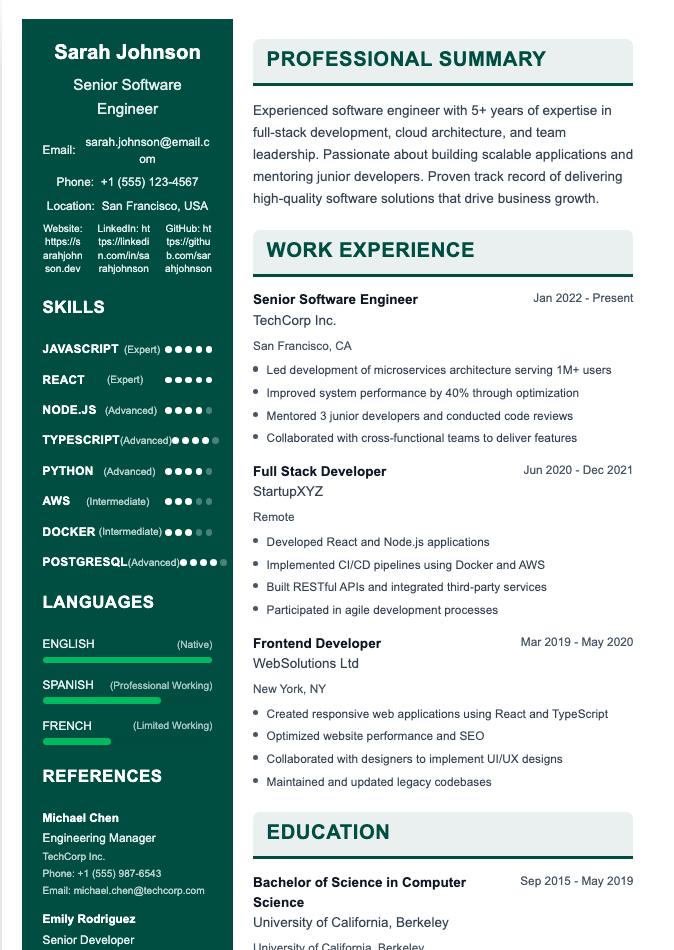
Uses graphics, icons, charts, and color. It can work for design roles when handed to a person, but it often fails ATS screening. Keep a plain version for online applications. See creative resume examples and two-column resumes.
Mini resume
A one-third-page or card-sized summary of your highlights, used at networking events and career fairs.
Video resume
A short video introducing yourself and your achievements. Occasionally useful for media, sales, or creative roles, but always as an add-on, never a replacement.
Plain text resume
A text-only version with no formatting, used for pasting into online forms or email. See plain text resume.
Federal resume
Used for US government jobs. Much longer and more detailed than a private-sector resume, often including hours per week, salary, and supervisor contact details for each role.
Academic CV
A complete academic record for research, teaching, and graduate school applications. See our graduate student CV and science CV sample guides.
Europass CV
A standardized CV format used in parts of Europe. See Europass CV format.
Which Type of Resume Should You Use?
Most guides stop at definitions. Here's a quick decision guide by situation:
- Steady career in one field: chronological
- Recent graduate: chronological or combination, with education near the top. See entry-level resume examples
- Career changer: combination, leading with transferable skills
- Returning after a career break: combination, with a one-line "Career Break" entry
- Frequent job changes or contract work: chronological, grouping contracts under one heading, or combination
- Senior or executive: chronological, often two pages. See executive resume examples
- Designer or creative professional: a polished chronological or combination resume, plus a portfolio; save heavy design for in-person use
- Government job: federal resume
- Academic or research role: academic CV
- Applying in Europe: a CV, sometimes in Europass format
When in doubt, choose chronological. It's the safest option for both recruiters and software.
Can You Use More Than One Type of Resume?
Yes. Many job seekers keep a chronological resume as their main version, plus a combination version for career-change roles, a creative version for networking, and a plain text version for online forms. Whatever you use, tailor the content to each job.
How Resume Type Affects ATS
Applicant tracking systems read resumes best when they have:
- Standard section headings (Summary, Experience, Education, Skills)
- Job titles, employers, and dates for each role
- A single-column layout without graphics or tables
That's why chronological and combination resumes perform best, while functional and infographic resumes often struggle. See ATS-friendly resume templates.
Tips for Any Type of Resume
- Tailor it to each job description
- Lead bullets with action verbs and add numbers
- Keep it concise: one page for most people, two for experienced professionals. See how long a resume should be
- Use a clean, readable layout. See what a resume should look like
- Proofread before sending
Frequently Asked Questions
What are the 3 main types of resumes?
Chronological, functional, and combination (hybrid). Chronological lists jobs from most recent; functional focuses on skills; combination blends a skills section with a chronological work history.
What type of resume do employers prefer?
Most employers and recruiters prefer the reverse-chronological format because it's familiar, easy to scan, and shows a clear career history.
What's the best resume type for someone new to the workforce?
A chronological or combination resume with education near the top, plus internships, projects, part-time jobs, and volunteer work.
Is a functional resume a good idea?
Usually not. Recruiters often distrust functional resumes, and they can confuse applicant tracking systems. A combination resume gives you the same skills focus while still showing your work history.
Which resume type is best for career changers?
A combination resume, because it leads with transferable skills and still shows a clear work history.
Build the Right Resume Type in Minutes
Our Resume Builder helps you create a clean, ATS-friendly resume in the format that fits your situation, whether that's a classic chronological layout or a skills-forward combination resume.