

Quick answer: A chronological resume lists your jobs from newest to oldest with achievements under each, and it's the best choice for most people because recruiters and ATS prefer it. A functional resume groups your experience by skills and minimizes job history, which can help with big gaps or scattered experience, but many recruiters distrust it. A hybrid (combination) resume opens with a skills or qualifications section and then lists a full chronological work history, which makes it the best option for career changers and experienced professionals with diverse skills. When in doubt, choose chronological. If you need to highlight transferable skills, choose hybrid. Use functional only in rare cases.
Choosing a resume format can feel like choosing a road at a fork in the woods. Pick the right one and you get where you're going smoothly. Pick the wrong one and you end up explaining yourself to a confused recruiter.
This guide compares chronological, functional, and hybrid resumes side by side, with the same person's experience written in each format, so you can see exactly how they differ.
Chronological vs. Functional vs. Hybrid at a Glance
Chronological resume
- Structure: jobs listed newest to oldest, with bullets under each
- Best for: steady work history in the same field
- Recruiter opinion: most preferred
- ATS compatibility: excellent
- Weakness: makes gaps and job-hopping obvious
Functional resume
- Structure: skill categories with achievements, brief job list at the end
- Best for: long gaps, very scattered experience, some career changes
- Recruiter opinion: often viewed with suspicion
- ATS compatibility: fair to weak
- Weakness: hard to see what you did where and when
Hybrid (combination) resume
- Structure: skills/qualifications summary, then full chronological history
- Best for: career changers, experienced professionals, people with diverse skills
- Recruiter opinion: well received
- ATS compatibility: very good
- Weakness: can get long if you're not disciplined
The Same Person, Three Formats
Meet Laura: 8 years in retail management, now applying for HR coordinator roles, with a recent HR certificate.
Laura's chronological resume
EXPERIENCE
Store Manager, Mountain Outfitters, Denver, CO | 2020 – Present
- Hired and onboarded 60+ employees, cutting time-to-fill from 5 weeks to 3
- Reduced turnover by 30% with structured onboarding
- Managed schedules and payroll for 25 employees in ADP
Assistant Store Manager, Mountain Outfitters, Boulder, CO | 2018 – 2020
- Trained 30+ new associates on policies and customer service
Effect: clear and credible, but the HR skills are buried under retail titles.
Laura's functional resume
RELEVANT SKILLS
Recruiting and Onboarding: Hired 60+ employees, cutting time-to-fill from 5 weeks to 3
Employee Relations: Reduced turnover 30% through engagement surveys and mediation
HR Administration: Managed payroll hours for 25 employees in ADPWORK HISTORY
Store Manager, Mountain Outfitters | 2020 – Present
Assistant Store Manager, Mountain Outfitters | 2018 – 2020
Effect: HR skills shine, but recruiters can't tell where each achievement happened.
Laura's hybrid resume
HR QUALIFICATIONS
- Recruiting: hired and onboarded 60+ employees
- Retention: reduced turnover by 30%
- HRIS: ADP payroll and scheduling | HR Fundamentals Certificate (eCornell)
EXPERIENCE
Store Manager, Mountain Outfitters, Denver, CO | 2020 – Present
- Hired and onboarded 60+ employees, cutting time-to-fill from 5 weeks to 3
- Reduced turnover by 30% with structured onboarding and monthly check-ins
- Managed schedules and payroll for 25 employees in ADP
Effect: HR skills lead, and the full work history backs them up. For Laura, hybrid is the winner.
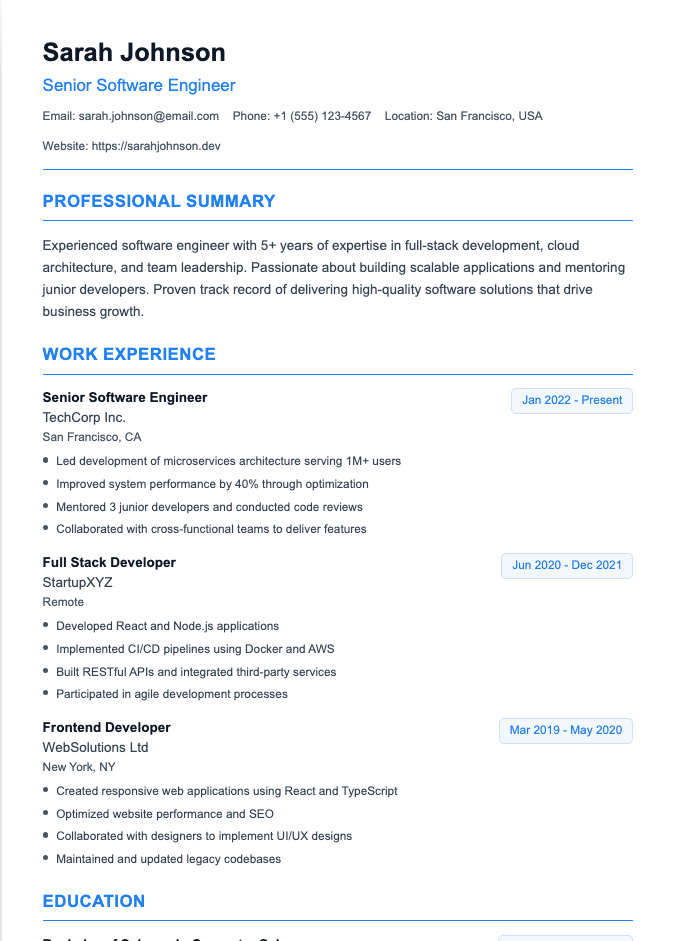
Pros and Cons in Detail
Chronological resume
Pros: familiar to recruiters, shows career progression, easy to skim, best for ATS.
Cons: highlights gaps, job-hopping, and unrelated titles.
See reverse-chronological resume.
Functional resume
Pros: downplays gaps and unrelated titles, puts transferable skills first.
Cons: recruiters may suspect you're hiding something, harder to verify, weaker ATS parsing.
See functional resume.
Hybrid resume
Pros: leads with relevant skills while keeping a credible timeline, flexible for many situations.
Cons: takes careful editing to avoid repeating the same achievements twice.
See combination resume.
Which Format Should You Choose?
Choose chronological if:
- You've worked steadily in the same field
- Your recent titles match the job you want
- You're applying to traditional industries or large companies with ATS
Choose hybrid if:
- You're changing careers but have relevant transferable experience
- You're a senior professional with a broad skill set
- You have a short gap or some unrelated roles
- You want to highlight certifications or technical skills up front
Choose functional only if:
- You have very long gaps or highly scattered, short-term work
- You're re-entering the workforce after many years
- You've tried hybrid and it still doesn't present you well
Quick decision rule:
- Do your recent job titles match the target job? Chronological.
- If not, do you have relevant skills from those jobs? Hybrid.
- If not, and you have major gaps? Functional (and explain in your cover letter).
For more format types, see types of resumes and different types of resumes.
How Each Format Handles Common Situations
- Employment gap: chronological with a one-line explanation, or hybrid. See how to explain employment gaps
- Recent graduate: chronological with education first. See entry-level resume examples
- Career change: hybrid. See career change resume
- Freelancer: chronological or hybrid, grouping clients. See freelance work on a resume
- Military to civilian: hybrid, translating skills first
- Executive: hybrid with a strong summary. See executive resume examples
Frequently Asked Questions
What is the difference between a chronological and functional resume?
A chronological resume lists jobs from newest to oldest with achievements under each. A functional resume groups achievements by skill and lists jobs briefly at the end.
Which resume format do employers prefer?
Most employers and recruiters prefer chronological resumes because they show a clear timeline. Hybrid resumes are also well received.
Is a hybrid resume the same as a combination resume?
Yes. "Hybrid" and "combination" describe the same format: skills first, then a full chronological work history.
Are functional resumes bad?
Not always, but many recruiters view them skeptically and some ATS parse them poorly. A hybrid resume usually achieves the same goal with less risk.
Which resume format is best for ATS?
Chronological and hybrid formats with standard headings and a single-column layout. See ATS-friendly resume templates.
Build Your Resume in the Right Format
Our Resume Builder offers chronological and skills-first templates, so you can choose the format that tells your story best and start writing in minutes.