

Quick answer: To list work experience in a resume, put jobs in reverse-chronological order and give each one a job title, company, location, and dates, followed by 3–5 bullets. Start each bullet with an action verb, focus on achievements rather than duties, add numbers where you can, and tailor the wording to the job posting.
Your work experience section is the main event. The summary is the trailer, the skills section is the cast list, but this is the part recruiters actually sit down to watch.
It is also where most resumes go wrong, usually by turning into a copy of the old job description. ("Responsible for answering phones." Riveting.) This guide shows you how to write work experience on a resume step by step, with the right format, a bullet formula, and work experience examples for different career stages.
Why Work Experience in a Resume Matters Most
For most job seekers, work experience is the largest and most-read section of the resume. It is where a hiring manager checks:
- Whether you have done similar work before
- How recently you did it
- The scope of your work (team size, budget, customers, volume)
- Whether you grew over time (promotions, more responsibility)
- What results you delivered
Everything else on your resume supports this story. If the experience section is vague, a strong summary will not save it.
How to Format Work Experience on a Resume
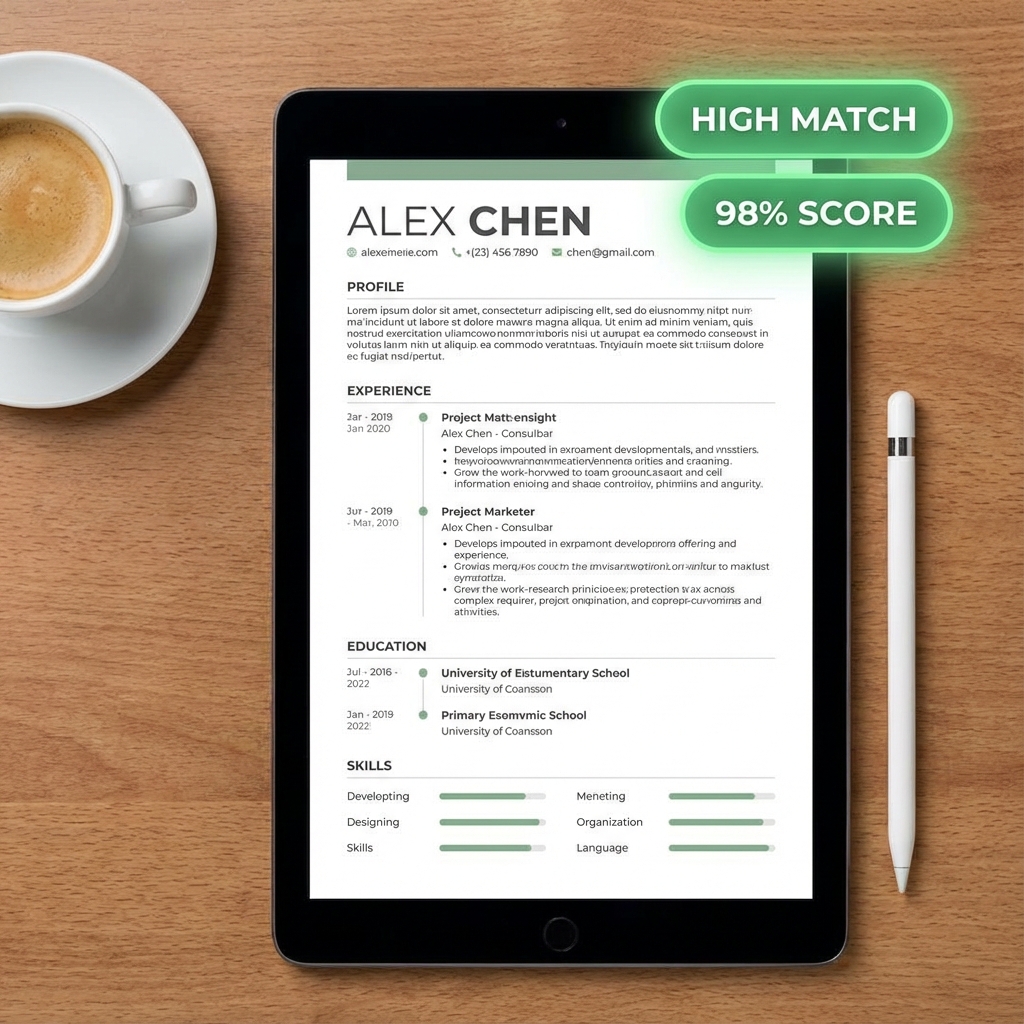
Use the reverse-chronological order: your current or most recent job first. (Learn more in our reverse-chronological resume guide.)
For each job, include:
- Job title (bold it; this is what recruiters scan first)
- Company name (use the full, official name)
- Location (city and state, or "Remote")
- Dates of employment (month and year, in one consistent format)
- 3–5 bullet points for recent roles, 1–3 for older ones
Example layout
Customer Success Manager
Northwind Software, Denver, CO · Jan 2023 – Present
- Manage a portfolio of 60 mid-market accounts with a focus on renewals
- Built a quarterly business review template now used by the whole team
- Reduced onboarding time for new clients by redesigning the kickoff checklist
Formatting rules
- Same structure for every entry. Title, company, location, and dates in the same order and style each time.
- Consistent dates. Choose "Jan 2023 – Present" or "01/2023 – Present" and stick with it.
- Present tense for your current role, past tense for previous roles.
- Use a standard heading like "Work Experience" or "Professional Experience" so applicant tracking systems recognize it.
- No paragraphs. Bullets are easier to scan.
How to Write Work Experience Bullet Points
Here is a simple formula that works for almost any job:
Action verb + what you did + result or scale
- Action verb: Led, built, launched, reduced, trained, negotiated, resolved
- What you did: The task, project, or responsibility
- Result or scale: A number, outcome, or context (how many, how much, how often, what changed)
Duties vs. achievements
The biggest upgrade you can make is turning duties into achievements.
- Duty: Responsible for managing social media accounts.
Achievement: Grew Instagram following from 2,000 to 9,500 in 12 months through a weekly video series. - Duty: Answered customer calls.
Achievement: Resolved 40+ customer calls per day while maintaining one of the highest satisfaction scores on the team. - Duty: Helped with inventory.
Achievement: Introduced a weekly cycle count that cut stock discrepancies and end-of-month surprises.
No exact numbers? Use scale and context instead: team size, number of clients, frequency, or who you worked with ("presented findings to the VP of Sales"). Our guide on resume bullet points that turn duties into results has many more examples.
Tips for stronger bullets
- Vary your verbs. Five bullets starting with "Managed" reads like a broken record.
- Be specific about tools. "Built dashboards in Tableau" beats "proficient in data tools."
- Lead with your best bullet. Recruiters may only read the first one or two.
- Mirror the job posting. If the posting says "stakeholder management," use that phrase where it truthfully applies. See resume keywords optimization.
Work Experience Examples by Career Stage
Entry-level / first job
Sales Associate
Valley Electronics Store, Sacramento, CA · Jun 2024 – Present
- Assist 100+ customers per shift in a high-traffic electronics department
- Recognized as "Team Member of the Month" for consistent upselling of protection plans
- Train new hires on register procedures and returns policy
Internship
Marketing Intern
Bright Ideas Agency, New York, NY · May 2025 – Aug 2025
- Drafted 20+ social posts and two blog articles for client campaigns
- Compiled weekly performance reports in Google Analytics for the account team
- Helped organize a client event with 200+ attendees
Mid-career professional
Project Manager
Summit Construction Group, Dallas, TX · Mar 2020 – Present
- Manage 6–8 commercial build projects at a time, each with budgets over $2M
- Coordinate subcontractors, permits, and inspections across all project phases
- Introduced weekly look-ahead schedules that improved on-time milestone delivery
Manager
Operations Manager
FreshFoods Distribution, Columbus, OH · Aug 2019 – Present
- Lead a team of 25 across receiving, picking, and shipping
- Redesigned shift scheduling to reduce overtime during peak season
- Partner with procurement and finance on quarterly cost reviews
Career changer
Teacher
Lincoln Middle School, Raleigh, NC · Aug 2018 – Jun 2025
- Designed project-based lessons for 120+ students per year (curriculum design)
- Presented progress data to parents and administrators each quarter (stakeholder communication)
- Coordinated a 6-teacher team to align assessments across grade levels (project coordination)
Notice how the career changer example names transferable skills in parentheses. For more on that approach, read our career change resume guide.
What Counts as Work Experience?
Work experience is not only full-time salaried jobs. You can include:
- Part-time and seasonal jobs
- Internships and apprenticeships
- Freelance and contract work (list your business name or "Freelance [Title]")
- Volunteer roles with real responsibilities
- Military service
- Significant unpaid roles, like leading a student organization
If a role is relevant, it belongs on your resume. If you have little paid experience, see how to write a resume with no experience.
Tricky Situations
How far back should work experience go?
Most career advisors suggest about the last 10–15 years. Older roles can be cut or summarized in a single "Earlier Experience" line, unless they are highly relevant to the job.
Promotions at the same company
List the company once, then stack each title with its own dates, newest first. It shows growth without repeating the employer.
Employment gaps
Be honest. If a gap is long, you can add a one-line entry such as "Career Break: Family Caregiving, 2022 – 2023" and mention any courses or freelance work from that time. Our guide on how to explain employment gaps covers what to say.
Short or irrelevant jobs
Short stints and unrelated roles can be left off if they do not support your application, as long as removing them does not create a confusing gap. If you keep them, give them one or two brief bullets.
Frequently Asked Questions
How do I describe my work experience on a resume?
List each job with its title, company, location, and dates, then add 3–5 bullets that start with action verbs. Focus on what you achieved and the scale of your work rather than repeating your job description. Tailor the bullets to match the job you are applying for.
How many bullet points should each job have?
Use 3–5 bullets for your most recent and relevant roles and 1–3 for older ones. More bullets do not mean more impact, so keep only the strongest, most relevant points.
Should work experience come before education?
For most people with at least a year or two of relevant work, yes. Students and recent graduates can put education first if it is stronger or more relevant than their work history.
Do I need to include every job I have had?
No. Include jobs that are relevant to the position or that show transferable skills. Leave off very old or unrelated roles, but avoid creating large unexplained gaps.
Should I use present or past tense?
Use present tense for your current role ("manage," "lead") and past tense for previous roles ("managed," "led"). Completed projects within a current job can be in past tense.
Can I include volunteer work as work experience?
Yes, if it involved real responsibilities and is relevant to the job. You can include it in your main experience section or create a separate "Volunteer Experience" section.
Turn Your Experience Into Achievements Faster
Writing strong bullets takes practice. Our Resume Builder suggests achievement-focused bullet points based on your job title and lets you tailor them to each posting, so your work experience section reads like proof instead of a job description.